How to Buy a Vintage Burberry Trench Coat: The Complete Guide
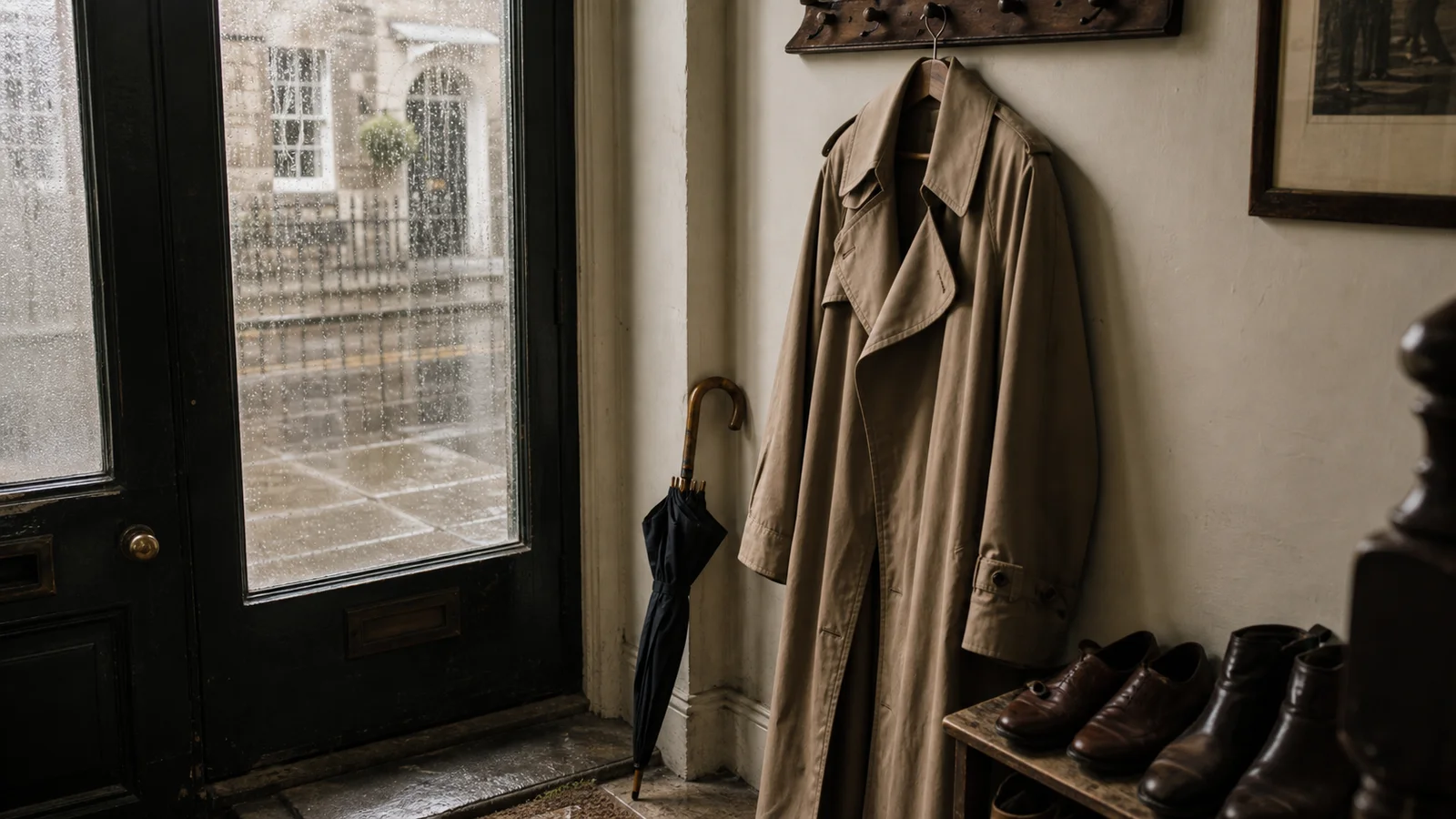
The vintage Burberry trench coat is the single most iconic garment in the brand's catalogue — and one of the most rewarding vintage purchases you can make if you know what you are looking for. This guide covers anatomy, sizing, condition assessment, and the red flags that should give you pause when buying online.
Classic Trench Anatomy
A full-spec Burberry trench has more moving parts than most outerwear. Knowing the names and functions helps you assess whether a coat retains its original components:
- D-rings: Metal rings on the belt, originally for attaching military equipment. Cast in solid brass on authentic vintage pieces; later versions may be hollow or lightweight alloy.
- Epaulettes: Shoulder straps fastened with small buttons. On genuine Burberry these are buttoned, not stitched flat.
- Storm flap: The extra layer of fabric across the right shoulder and chest that sheds rain. On some later models this is absent or purely decorative.
- Gun flap: The extra flap across the left shoulder, originally to cushion a rifle stock. Often the first thing removed in later simplified versions.
- Throat latch: The small tab at the top of the collar that fastens across the neck for weather protection.
- Belt: Should be wide gabardine matching the coat body, with a solid brass buckle stamped with the Burberry name on better-era pieces.
- Check lining: The Nova check wool lining on the body. Inspect for tears, fading at shoulder areas, and separation at seams.
Single vs Double Breasted
Burberry made both. The double-breasted ten-button configuration is the most classic and the most collected. Single-breasted versions exist and are arguably more versatile for modern wear but command less collector premium. Both are genuine — the double-breasted silhouette is simply the ur-trench that most buyers associate with the brand.
Length Variations
- Full-length (mid-calf to ankle): Maximum drama, maximum warmth, hardest to wear casually.
- Mid-length (knee to mid-calf): The sweet spot for most buyers — protects in rain, works across settings.
- 3/4 length (above knee to knee): More casual, easier to wear with dresses and boots.
- Car coat (hip to upper thigh): The most casual silhouette; great for everyday wear, less iconic.
Reading the Vintage Size Label
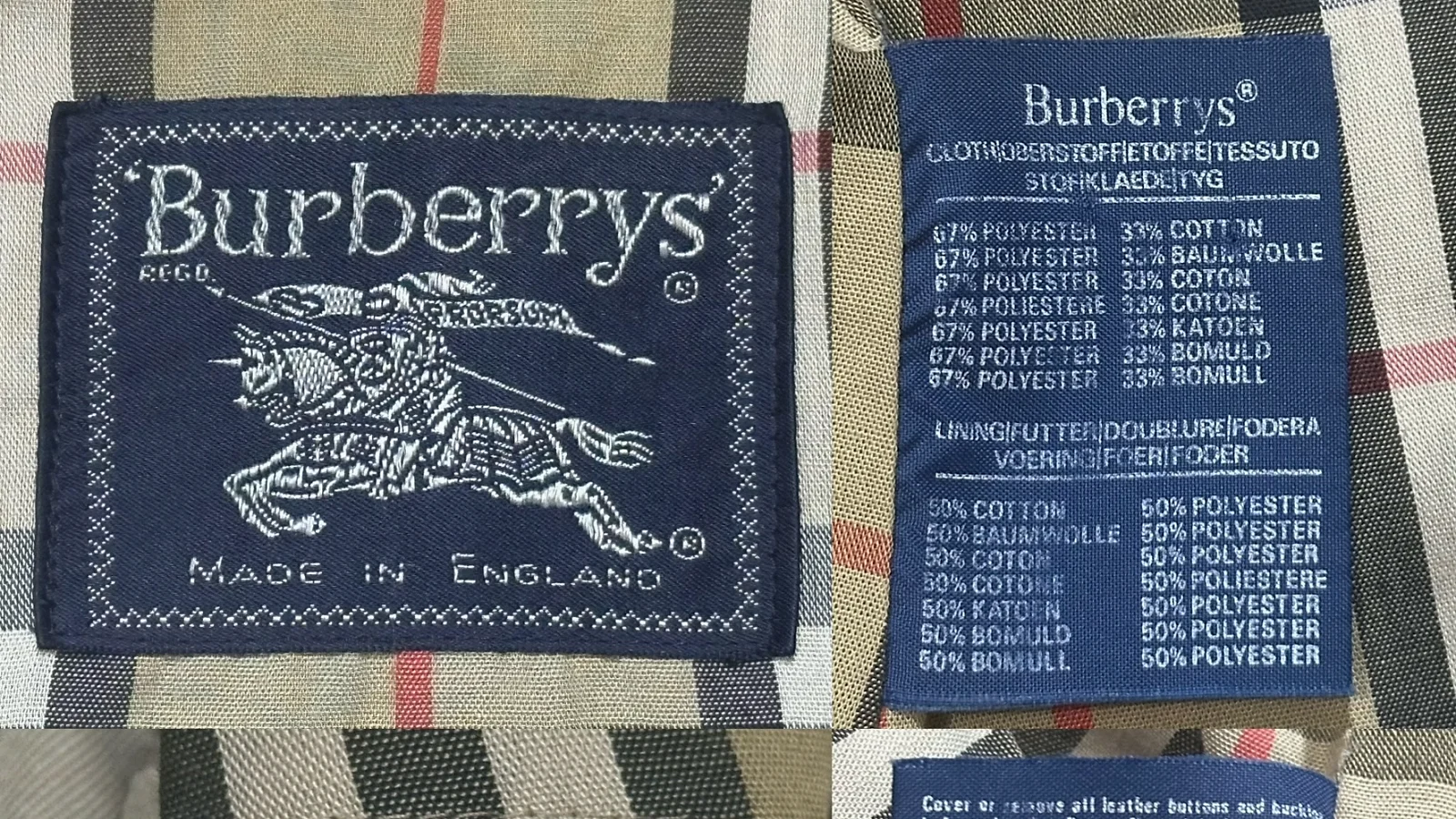
Vintage Burberry size labelling uses UK sizing conventions and the numbers reference chest measurement in inches — but runs small by modern standards. A vintage label reading "40 Regular" does not correspond to a modern size 40 chest; the cut and internal measurements will typically be tighter.
Rule of thumb: size up one to two sizes from your usual modern sizing when considering vintage Burberry. A modern size M might need a vintage L or even XL for comfortable wear.
Key measurements to request from any online seller:
- Chest (measured flat across the chest, just under the armpit): double the reading for the full circumference.
- Shoulder (seam to seam across the back): Critical — shoulder width is hard to alter.
- Sleeve length (shoulder seam to cuff): Sleeves can be shortened but not lengthened.
- Back length (collar seam to hem): Determines overall coat length.
Gabardine Hand-Feel
Good-condition vintage Burberry gabardine has a distinctive feel: tightly woven, slightly crisp, with a subtle waxy or papery hand that is entirely different from cheaper coatings or modern reproductions. The fabric should have body and drape simultaneously — it holds its shape but moves. If a coat feels limp, thin, or too soft, the gabardine may be worn out or it may be a lower-quality piece.
Worn gabardine shows as shiny patches (particularly at elbows, cuffs, and collar), fabric thinning, and loss of that characteristic hand-feel. Some sheen is acceptable and part of the vintage character; full shininess that covers large areas indicates heavy wear.
Hardware Check
- Horn buttons: Warm mottled appearance, slightly translucent. Will have slight variations piece to piece. Genuine horn sounds different from plastic when tapped — a slightly denser click.
- Plastic buttons: A red flag on 1970s and earlier pieces. On 1980s+ pieces, quality resin is acceptable but lower value.
- Buckle stampings: On better-era pieces the belt and collar buckles will be stamped "Burberry" or "Burberrys". Check that these are present and legible.
- D-ring quality: Heavy solid cast = earlier production. Lightweight/hollow = later or replacement.
Lining Quality
- Original wool Nova check lining: Found on the best-era pieces. Has weight, warmth, and a crisp pattern. Check along the seam allowances for fraying and at the shoulder/collar junction for separation.
- Cotton Nova check lining: More common in 1990s and later. Lighter, cooler, less premium feel — but perfectly correct for those eras.
- Replacement or repaired linings: Not a dealbreaker if well done, but affects value. Look for colour/pattern mismatches and different stitching style.
Condition Grades: What's Acceptable vs What to Avoid
Excellent vintage condition: Clean, no stains, hardware intact, lining sound. Minimal wear marks consistent with age. This is the top tier and priced accordingly.
Good vintage condition: Minor marks, slight fading in low-visibility areas (under collar, inside cuffs). Hardware present and functional. Lining intact but may show light wear. Acceptable for wear and reasonable value.
Fair condition: Noticeable wear, some hardware replacement, minor lining repairs. Still wearable but require investment of care or tailoring. Priced lower — appropriate for buyers who want to use a piece rather than collect it.
Avoid: Rust stains from metal hardware (very difficult to remove and indicate long damp storage), large tears in gabardine, significant lining detachment, missing structural components like the storm flap or gun flap, or musty odour that has penetrated the fabric.
Price Anchors
As a rough guide for authentic, dated pieces:
- 1970s double-breasted, full-length, excellent condition: The premium tier.
- 1980s trench, good condition: Solid mid-market price.
- 1990s trench, fair condition: Entry-level, wearable pieces.
- Car coats, any era, good condition: Generally lower than equivalent trench.
Prices fluctuate with trends — the vintage Burberry trench has seen significant appreciation over the past five years.
Red Flags When Buying Online
- No label photography: Any legitimate seller will photograph the label. No label photo = walk away or ask first.
- Only the outside photographed: Request lining, hardware close-ups, and any condition issues.
- Measurements not provided: Always ask. "One size fits most" is not acceptable for a structured trench coat.
- Suspiciously low price for stated condition: If a piece is described as "excellent" but priced 60% below market, the condition description is probably optimistic.
- "Burberry style" or "Burberry inspired": These phrases mean fake.
We photograph every detail of every coat in our shop, including labels, hardware, lining, and any condition notes. Browse current trench coat listings and message us with your measurements.